
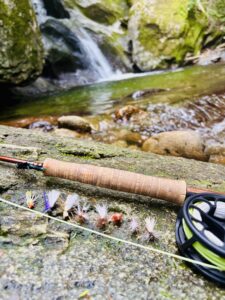
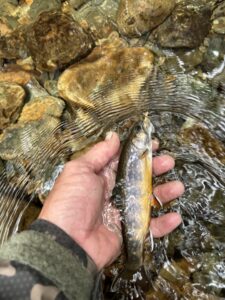
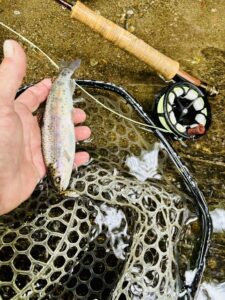
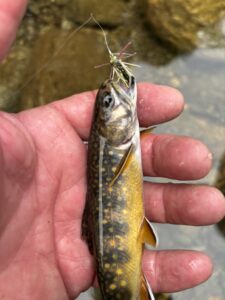
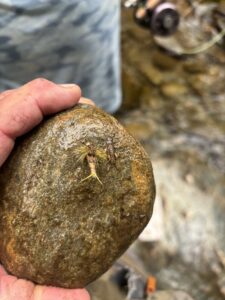
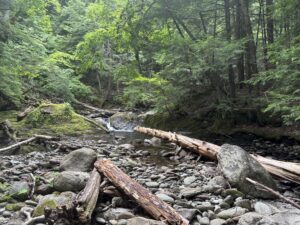
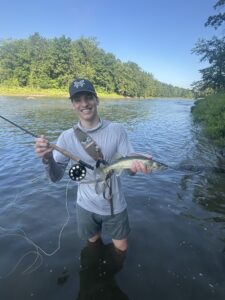
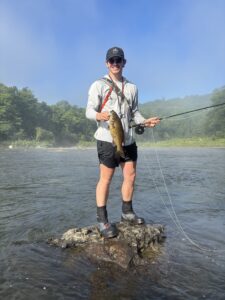
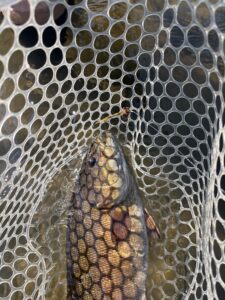
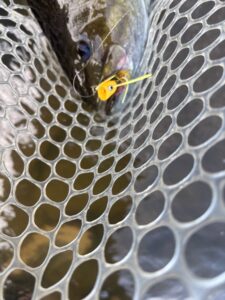
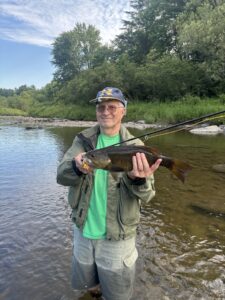
Hi Folks, It appears that the weather has finally stabilized and with it the water levels have settled. Pretty nice Vermont summer with cool evenings and beautiful cool low humidity days. Of course, there have been a few weather blips with periods of high humidity and warm air temperatures. I like being on the water early or late in the day. I try to take advantage of low light and potentially cooler water temperatures. A large part of my summer guiding business is small stream fly fishing. A great place to learn how to fly fish. If you like hiking, a small brook is amazing. To fish them successfully, you need to wear out some boot leather. A small environment that does not require long fly casts. Casting accuracy is the key in small stream fly fishing. Often the fly needs to be landed in a small spot. The fish hold in small pockets, around big rocks, and soft water that abuts heavy water. I really enjoy getting trout to look up to eat. Who doesn’t like dry fly fishing for trout. It beats the hell out of staring at a strike indicator. There is a reason why the dry fly fishing is so good in our small brooks. These small streams have stability, shade, and cold water.Most of the high elevation brooks I guide and fish lack a ton of food. Not many water born insects. Flip rocks sometime in riffles in a brook and you will not find a lot of nymphs. In other words, the trout have to eat when given the opportunity. Trout are drift feeders and opportunistic. Often I find many strikes in small streams are probably a result of fish being opportunistic versus selective. Thus, attractor patterns like a Royal Wulff, Royal Chubby, Rubber legged Royal Trude, Cal Birds Pocket Water all produce fish. I’ve found red seems to really attract attention in small streams. Approach is important when fishing clear small water. I dress in camo or earth tones and always fish upstream. It is easy to spook fish. Trout see 270 degrees around themselves. They often pick up an anglers movement before you even realize you have scared them off. Do not false cast over the pool you are fishing. The fly line will put them down. I do think that a number of dry fly patterns can be used. Olive/green bodied Hopper patterns have been dynamite lately. Very seldom do I fish below the surface in small streams. However, many brooks I fish have wild browns and rainbows. They do not always eat dry flys as greedily as native brook trout. I like casting wooly buggers, Whitlock sculpins, and Muddler Minnows into plunge pools and retrieve them very quickly in order to to move a big fish. When the water is high or the fish are extremely fussy, I’ll put a small dropper nymph off a dry fly. So, lots of fun to be had in small Vermont trout streams. Our big rivers are too warm in summer and the fish density is lacking. Lots of stocked trout. The small streams are full of native and wild fish. Remember to clean your gear and keep the non-native species at home.Have Fun, Willy
Willy Dietrich, Catamount Fishing Adventures
Stowe, Vermont, United States
Guided fishing trips provided for anglers of all ages and abilities in the Stowe, Vermont area.
Licensed Fishing Guide with 24 years of experience in Vermont.
Federation of Fly Fishers certified fly casting instructor.
Vermont fishing and hunting licenses offered.
Fully insured.